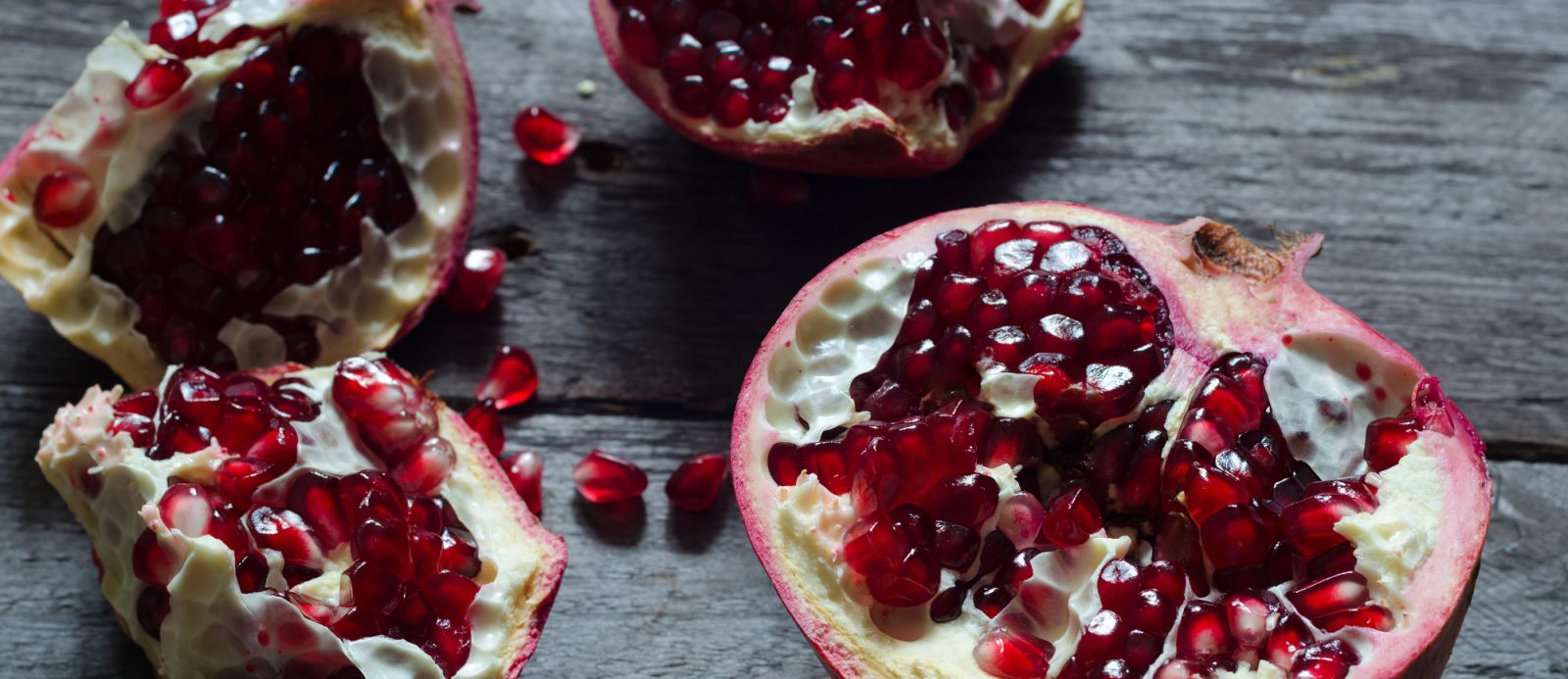
This crimson and special fruit certainly deserves a place at our table – not only because of its countless nutrients, but also because it is associated with good luck. This is why we break a pomegranate on the threshold on New Year’s Day.
Rich in vitamins, minerals and micronutrients, pomegranate is extremely beneficial to our body. It is at its best during the autumn and winter months and takes its place in our shopping cart during a visit to the grocery store, especially around Christmas.
Here at Horio, we put red, fresh pomegranates in a bowl on the kitchen table along with small yellow and golden shiny decorative balls, pine cones and branches with deep green pine needles. At dusk, we peel them and patiently collect their seeds in a bowl to offer them on a platter with graviera cheese, walnuts and fruit, or sprinkle them over a fresh green salad.
Let’s find out more about this miraculous fruit!
Pomegranate is fresh during autumn and winter in Greece.
Food worth
sharing